Can you actually explain "kanpake"?
The other day I posted this on X.
Theory: if you cut sleep, you can do anything.
I'm going to "kanpake" a feature-length film in one week.
#KaimakuTenMillion #GossipSugar
— View the post on X
And after writing it, something occurred to me.
Could I actually explain what "kanpake" means?
I use the word constantly. Everyone on set does. It's been flying around every commercial and music video shoot I've ever been on.
But precisely because it's so ordinary, I had never really understood it.
So I looked it up.
It's short for "complete package"
Kanpake = kan-pake = kanzen package, "complete package."
Editing done, sound mix done, titles done: a piece assembled to the point where the only thing left is to air it. That's a kanpake.
So far, no surprises.
But why "package"? That's the interesting part.
A leftover from the tape era
Early television was mostly live. This was the 1950s and 60s.
Then videotape spread, and the workflow shifted to the one we know now: record, edit, deliver. And "deliver" literally meant packaging a physical tape and bringing it to the broadcaster.
"Completely packaged" became "kanpake."
The image of putting physical media in a box and handing it over turned straight into the word.
"Kanpake delivery" vs. "materials delivery"
In Japanese broadcasting, what a production company hands to a network comes in two broad forms.
Kanpake delivery: the production company finishes everything. Titles, sound mix, all of it. The network just airs it.
Materials delivery: the piece is handed over partly finished, on the understanding that the network will add titles or do the mix.
That distinction underpins contracts and workflows. "Please deliver it as a kanpake" simply means "do everything before you bring it." Budgets and responsibilities change with it, so a mismatch here is something to watch for on any job.
"Kanpake" in the tapeless age
Almost nobody uses tape anymore. File-based delivery is the norm: upload to a server and you're done.
But the word "kanpake" has survived.
There's no physical package anywhere, yet the concept lives on. Industry jargon is funny that way. The "start" in "ready, start" originally meant cranking a film camera. The words outlive their era.
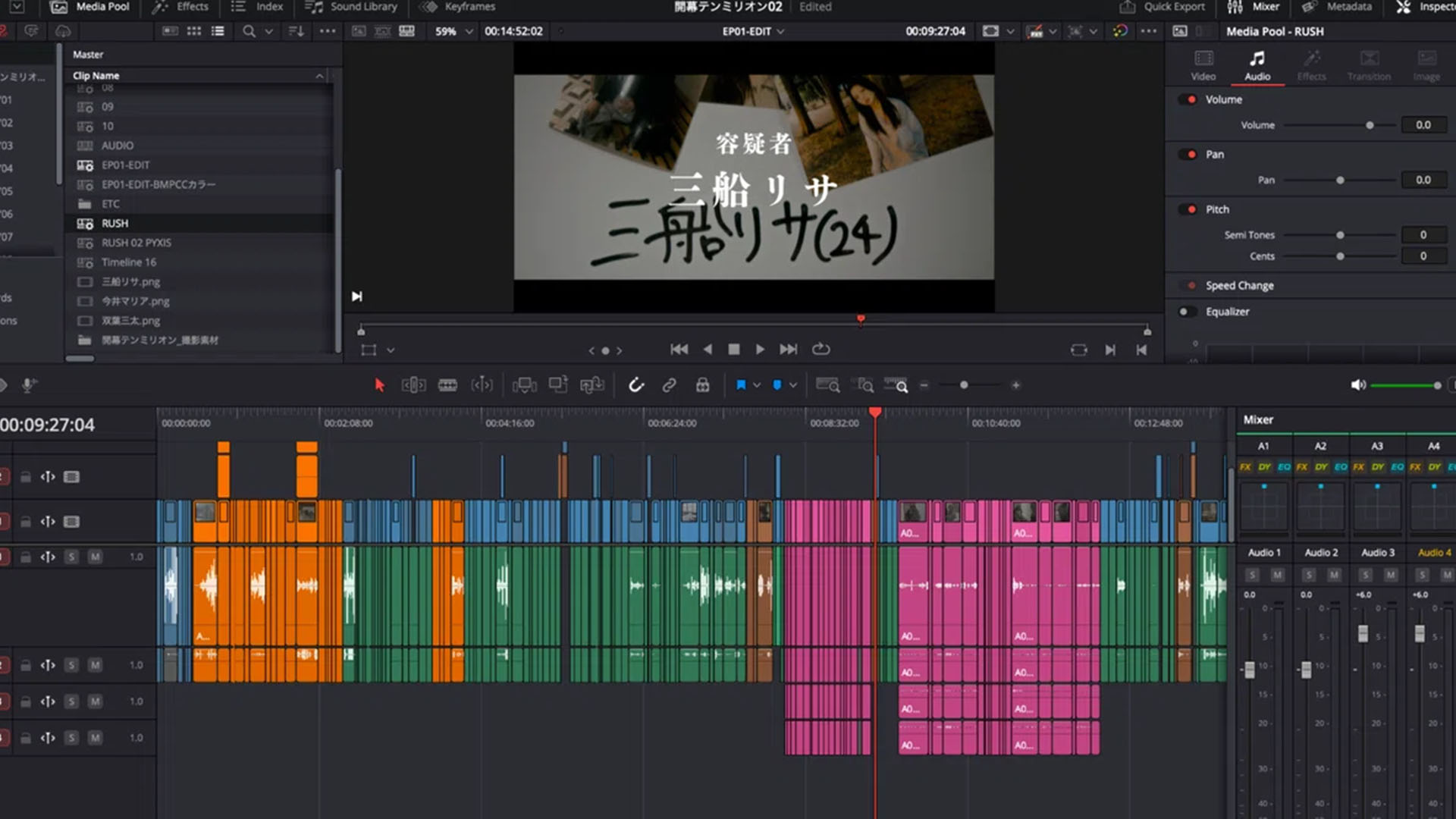
The editing timeline for "Kaimaku Ten Million": 165 clips, one roughly 15-minute episode being finished in DaVinci Resolve
"Kanpake" in one-man filmmaking
For me, the meaning is simpler.
Script, shooting, editing, color grading, sound mix, titles, thumbnails: I do all of it alone. So the only person who can call something a kanpake is me.
The moment I can say "this is finished" isn't confirmed by anyone else. It comes down to whether I'm satisfied. That's freeing, and a little frightening.
As for the post above: "Kaimaku Ten Million," the project to finish a feature-length film in one week, is very much in progress. Sleep is being cut.
Buzz / Gossip Sugar Films