Here are the characters of “THE MELT,” and where each of them comes from.
▶ Watch “THE MELT” Part 1 on YouTube
Nagisa Mitsuhashi

Her mother died in a traffic accident when she was small, and she was raised strictly by a stern father.
She has no siblings, and helps with the housework at home.
Talking back to her father when he came home tired from work got her harshly scolded, so little by little she learned to read people's faces.
If he was in a bad mood, she said nothing. Living that way, she came to fear speaking at all.
In junior high, a classmate began teasing her for it.
It was still far from what you would call bullying, but it was enough to make Nagisa stop going to school.
At first her father told her firmly to go, but busy with work, he gradually left her alone.
The turning point came when she saw a high school festival play on social media:
Marin Aikawa's performance, and the short video posted afterward.
The Marin on stage and the real Marin, with her natural expressions and the way she spoke, were completely different.
Nagisa was drawn to acting, and to Marin.
She followed Marin on Instagram and began sending her messages.
It was like being pen pals. The two wrote to each other for a little over a year.
To Nagisa, Marin was like an older sister, and like the mother she had lost.
Marin did for her what her father could not.
“You might be able to get out of this, too, once you find something you want to do.”
With those words from Marin, Nagisa made up her mind.
She entered the same high school as Marin, went to school, and joined the drama club.
Then the club's lessons began.
They were nothing like what Nagisa had imagined.
Feeling Marin's expectations, Nagisa gives everything she has to meet them, but it is a world far too unfamiliar to her, and she cannot.
Her father's disappointed face, her junior high classmates snickering: the memories come back.
The fear of losing the place she had finally found. For Nagisa, that was the hardest thing.
She wants to be recognized by Marin, whom she adores, and for that she must become the ideal actor Marin hopes for.
And someday, she hopes to tell Marin that she loves her.
Rion Sato
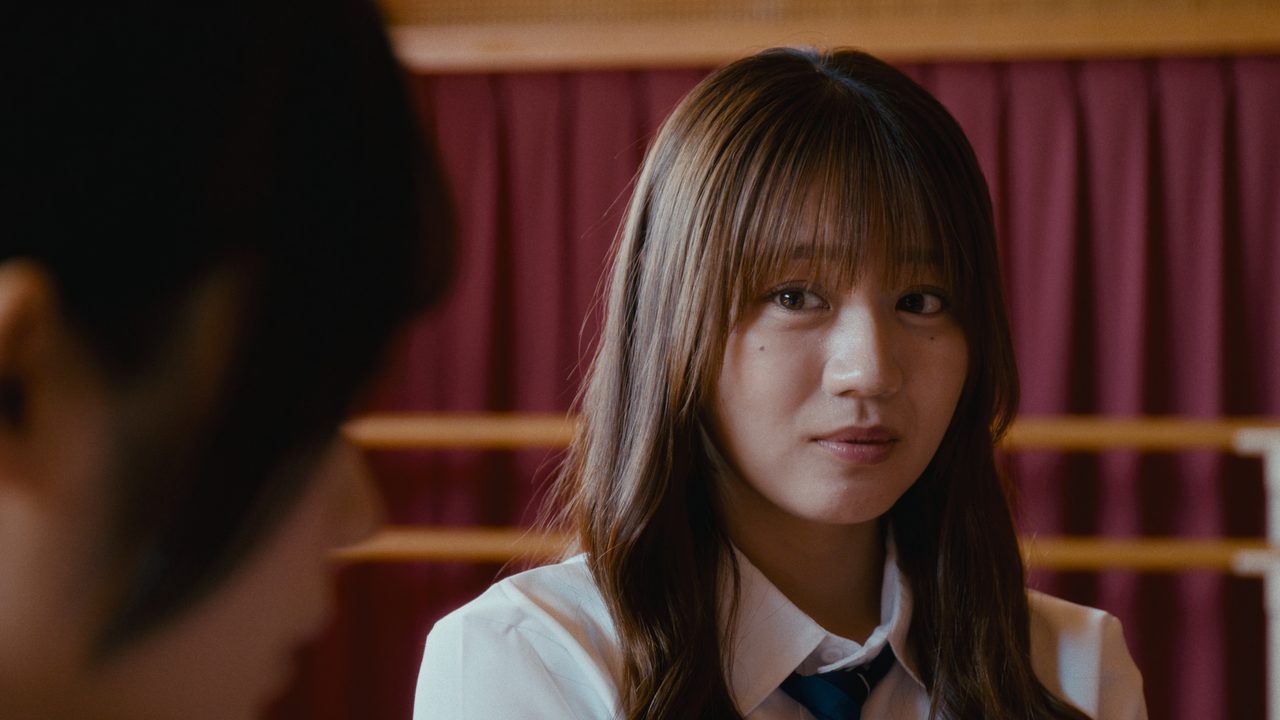
Rion grew up in a single-mother home. Under her mother's influence, she grew up watching TV dramas and films.
She wants to be an actress. It was only natural that Rion's dream became the same as her mother's.
But she soon learned that reality is not so kind.
In junior high, she and her mother went to several auditions. She was told “You passed,” and then asked for expensive lesson fees.
Her family was not well off, and could not pay fees of several hundred thousand yen.
“But I passed…” Young Rion blamed their circumstances and began to fight with her mother.
Her mother then took on more part-time work, went into debt, and got Rion into an agency.
Now her dream could begin. So Rion thought, but she was wrong.
The reality of an agency that charges for lessons was miserable.
Despite the high fees, the teacher was an acting coach no one had heard of, and there was no audition information at all.
Social media was banned. In effect she was shut in something like a prison, with only the money drained away every month.
Her mother still believed Rion would succeed, and kept working even as her health gave out.
A year passed. No work, no audition information.
When they raised it with the agency, they were told only, “Her skills aren't there yet.”
Then came the contract renewal, and another request for several hundred thousand yen.
Her mother said they could keep going if she borrowed a little more, and was ready to renew.
Rion remembered the cruel thing she had once said to her mother.
“If Dad were here, we wouldn't be this poor. He left because of you, Mom.”
Rion turned down the renewal.
She apologized to her mother and told her: as long as I can act, I don't care where.
Her mother found her a community theater group, and she joined it.
“In show business, there are people who use other people's dreams to line their own pockets.”
That fact was carved deep into Rion's heart.
Her dream was no longer only about her own success.
She wants to achieve something for the mother who believed in her and gave so much.
But the community group was nothing more than a place where local middle-aged men and women with no ambition gathered. It was then that she saw Marin act at a high school festival.
It was the acting Rion was aiming for.
At the agency and at the community group alike, Rion never had anyone to learn acting from.
So she decides to join the drama club where Marin, with her outstanding acting, belongs, and to absorb every skill she can.
Hinami Hoshino

She grew up in a perfectly ordinary family. They get along well, and there are no particular problems.
She joined the drama club not out of any strong wish to be an actress, but simply because, choosing among clubs, it looked fun.
It was all supposed to be just one part of high school life.
Graduate, go on to university, get a job…
But the gears slipped.
Because of Sugita, the drama club's advisor.
Sugita used her position to make students the targets of sexual harassment.
In the name of acting instruction she touched students' bodies; in the name of building a character, she brainwashed them and made them touch her.
Kota. The male character Sugita holds as her ideal.
“Kota is violent. He uses his hands before his words. Watching the other person suffer is his pleasure.
And he looks down on women.”
Sugita had students play her ideal man, and had them assault her.
Whenever anyone questioned it: “It was part of the acting instruction.”
That excuse was Sugita's standard move.
Marin, who is pure when it comes to acting, works hard to understand Kota.
In the course of that character work, she and Hinami grew closer, and Hinami mistook it for affection directed at her.
Sugita had said it from the start:
Hinami should be the one to play Kota.
People have many natures, yin and yang.
Hinami had, from the beginning, a nature close to Kota's.
But she herself had not noticed it.
Raised in an ordinary home and living an earnest life, Hinami did not understand the impulse sleeping inside her.
But when she came into contact with Marin, who was desperately trying to become Kota, it rose up like a great wave and swallowed her.
Hinami did not think of what Sugita did as brainwashing.
To Hinami, it truly was acting instruction.
To become another person: it contained the method needed to achieve that.
Sugita had arrived at an answer close to the theory of acting that Stanislavski spent years building.
But what Stanislavski sought was acting as art, while what Sugita was doing served only her own selfish desire.
The gears of Hinami's life had slipped.
Because she realized that she takes the same pleasure Sugita did in making people move the way she wants.
Yet rather than deny it, Hinami drove Sugita out, and chose to keep moving toward that desire.
Marin Aikawa

Her father is a cinematographer; her mother is a video editor.
She grew up surrounded by entertainment.
Her father hoped she would become a film director.
So he showed her all kinds of films.
He did not want her to harden in one direction. So, whatever the genre or country, he wanted her to see everything.
But contrary to her father's hopes, Marin had unusual tastes.
Once she fixes on one thing, she watches or listens to nothing else, over and over.
Music, for example. When she likes a song, she plays that one song all day long.
The same with films and manga. She keeps watching the same work endlessly.
And her parents realized the same was true of her life outside entertainment.
Her attachment to, her fixation on, the things she likes is stronger than most people's.
She is not just repeating. Within the repetition she keeps making new discoveries. That, she also says, is what good work is.
Something in which you find new things each time you return to it.
But in Marin, it is far stronger than in most.
Understanding this trait, her father still believed she was suited to directing.
He gathered actors he knew and had her make a short film.
But Marin, more particular than anyone, never ran out of demands for her actors, and the shoot went nowhere.
In the end, she pushed the actors aside and played the part herself.
And it was there that Marin became more interested in digging into a character and playing it herself than in making films.
Perhaps it was inevitable that Marin and Sugita would meet.
Sugita's theory of acting, though it served her own selfish desire, had a side that was right when it came to digging into a character.
Under Sugita, Marin came to dig deeper and deeper into the person called Kota.
And through acting, she sensed that Hinami has a masculine nature within her.
That is why she felt Hinami should be the one to play Kota.
But in truth, Marin was still conflicted.
If there were a way to change one's very nature, she could become Kota herself.
To erase her true self and become a completely different person.
That is the ideal acting Marin seeks.
Even now, to make it real, she keeps thinking about what human thought is.
Stage play “The Fallen Has Melted” runs October 22–25 at Atelier Fanfare Higashi-Shinjuku, Tokyo.
Tickets →